
Last updated October 16, 2026
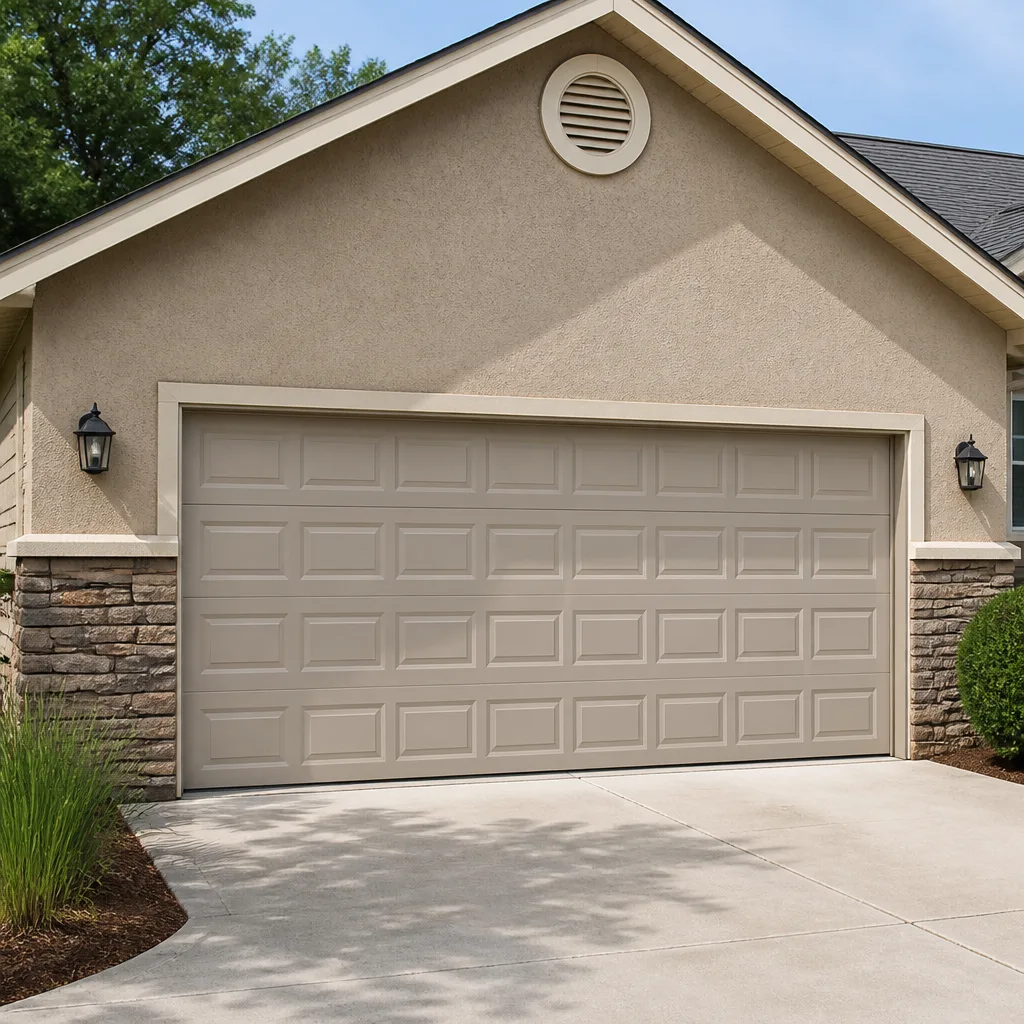 Raised-panel steel
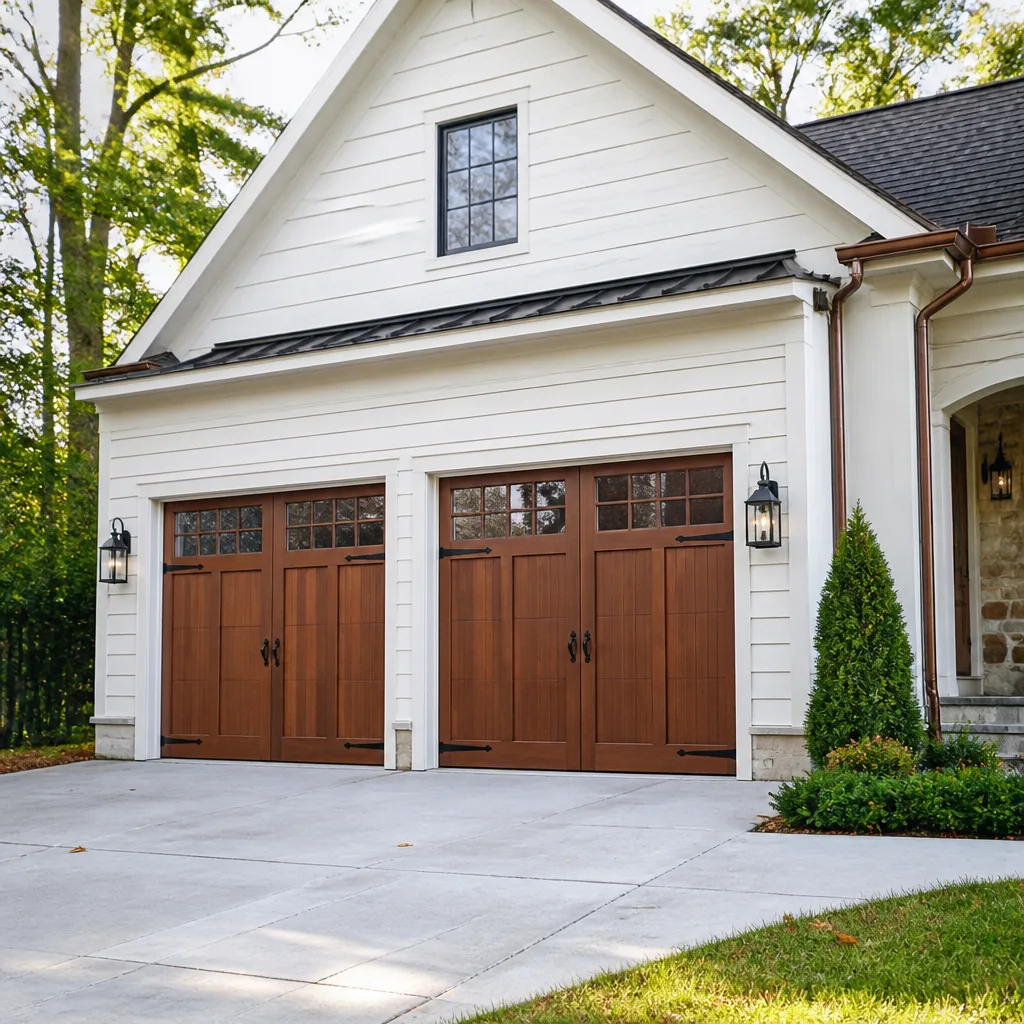 Carriage house
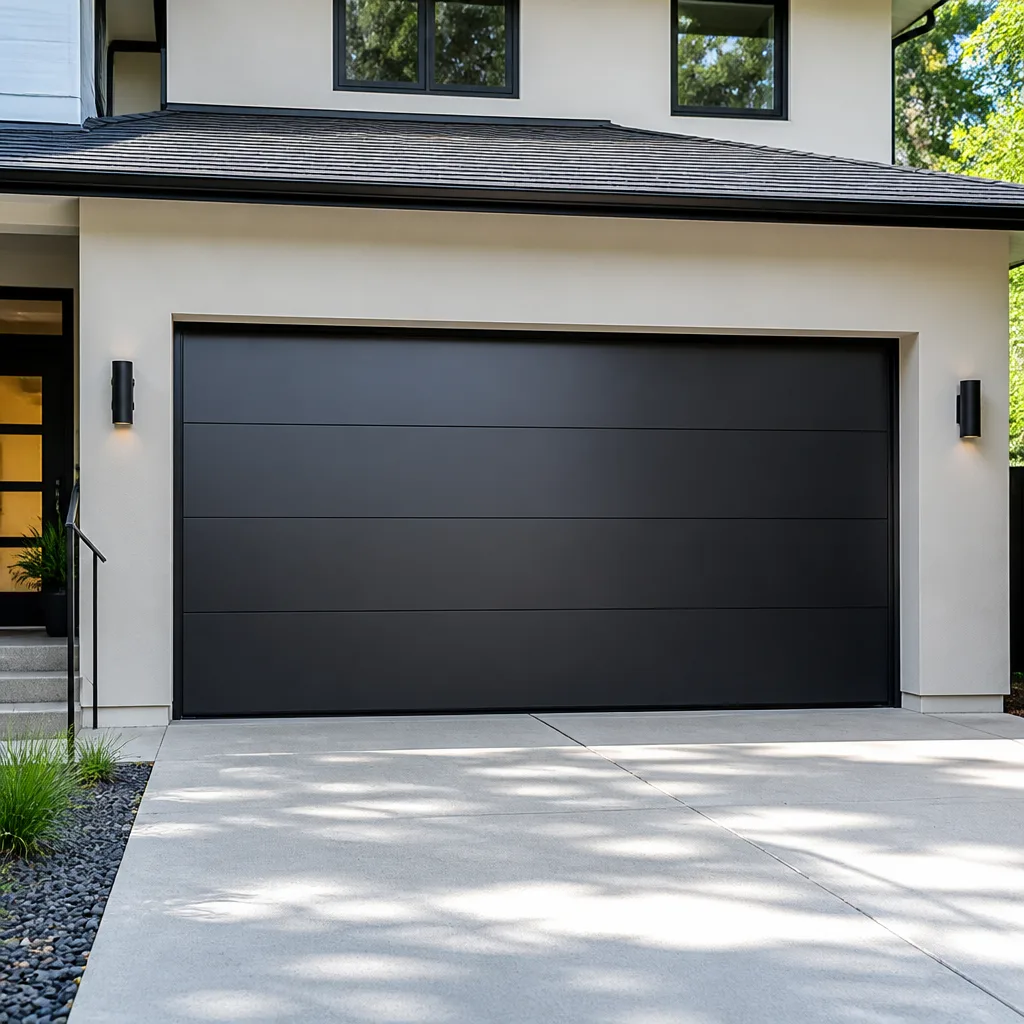 Modern flush
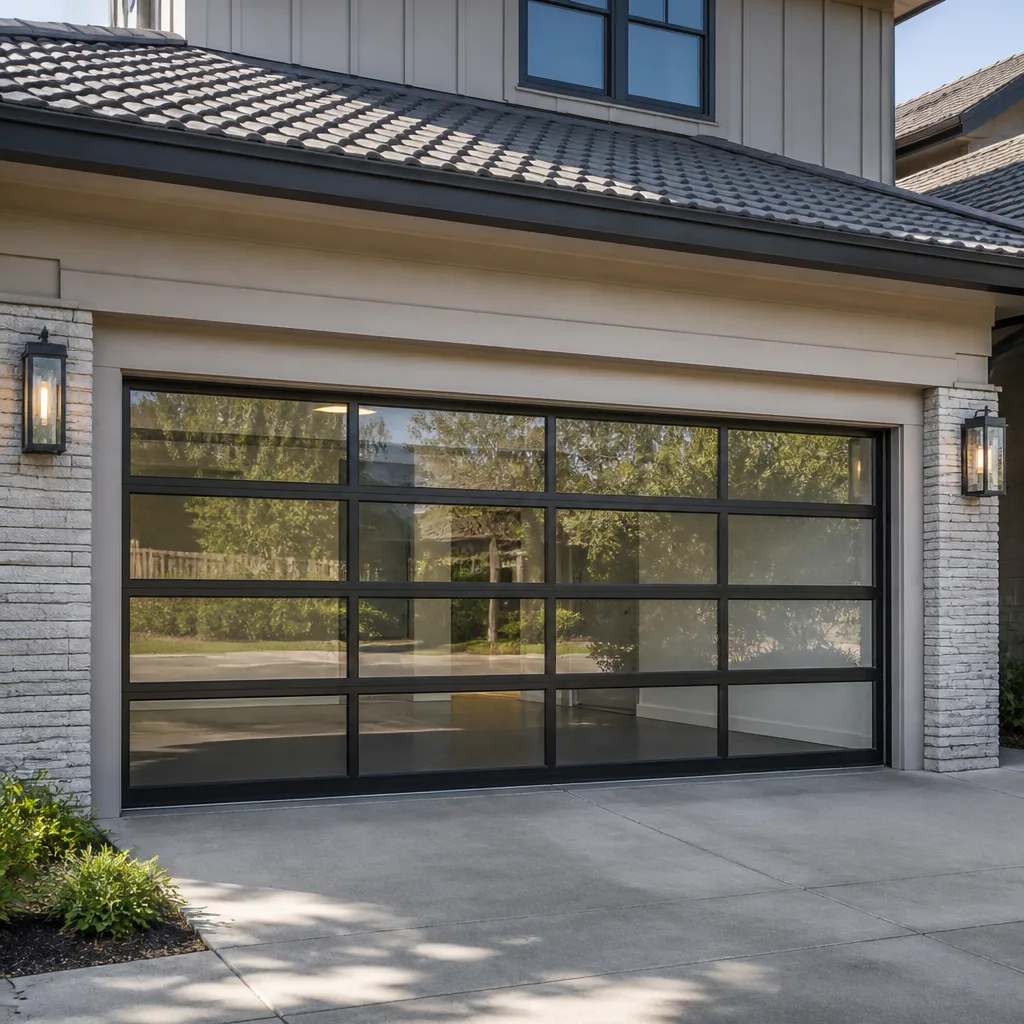 Full-view glass
 LiftMaster openers
 Chamberlain openers
Full 25-point door and opener safety check with every visit - springs, cables, rollers, tracks, and your LiftMaster or Chamberlain opener included
You get a price before we start. It does not change when the truck arrives.
Get your free estimateSeasonal Garage Door Care for West Palm Beach: Year-Round Homeowner’s Guide
Most national garage door maintenance guides tell you to do a “spring tune-up” and a “fall inspection.” That advice was written for places like Ohio and Michigan, where winter freezes split seals and summer storms rust hinges. West Palm Beach doesn’t have those seasons. We have a dry season that bakes rubber until it cracks, and a wet season that corrodes everything the dry season weakened. This guide replaces the generic national calendar with a maintenance schedule that matches South Florida’s actual weather patterns, so you’ll know exactly what to check, when to check it, and what it costs when something needs fixing. For a deeper dive, see our Complete Guide to Garage Door in West Palm Beach.
Styles & brands we work with
Quick Answer
West Palm Beach garage doors need two maintenance periods per year: a pre-wet-season check in April or May to prepare for hurricane winds and daily downpours, and a dry-season check in November to repair UV and heat damage. The single most important ongoing task in this climate is keeping the photo-eye sensors clean, because humidity, irrigation overspray, and Florida pollen clog them at roughly double the national rate. Call Doyle Garage Doors West Palm Beach home at (728) 220-0705 for a free seasonal inspection quote.
Table of Contents
- Why National Maintenance Guides Get West Palm Beach Wrong
- The Dry Season: November Through April
- The Pre-Wet-Season Window: April Through May
- The Wet Season: June Through October
- Post-Storm Inspection Checklist
- Photo-Eye Sensor Maintenance: The Year-Round Task
- What Seasonal Maintenance Costs in West Palm Beach
- Common Mistakes to Avoid
- When to Call a Professional
- Frequently Asked Questions
- The Bottom Line
Why National Maintenance Guides Get West Palm Beach Wrong
The standard “spring and fall tune-up” schedule published by most garage door brands assumes a climate with four distinct seasons, including a freeze-thaw cycle that stresses metal and rubber in predictable ways. South Florida doesn’t freeze. What we get instead is relentless sun from November through April, when daytime temperatures regularly climb into the 80s and UV radiation breaks down rubber weather seals, vinyl panel sections, and plastic components. Then the wet season arrives in late May or early June, and daily thunderstorms push humidity to saturation levels for months at a time.
So when a national guide tells you to “lubricate the hinges in October before winter,” you’re acting at the wrong time. By October in West Palm Beach, the wet season has already been corroding your hardware for five months. The time to prepare was May. And when the guide says to “check the weather seal in April after the last freeze,” you’re six months late. The seal has already spent an entire dry season cooking in the sun. Following a national calendar means you’re always one season behind the damage. The better approach is to work with our two actual seasons and check the right components at the right time.
We’ve been repairing garage doors in West Palm Beach since 2001, and we see the same pattern every year. Homeowners who follow the national schedule come to us in October with seized roller bearings and cracked seals that should have been addressed in May. Homeowners who follow a local schedule catch those problems before they become breakdowns.
The Dry Season: November Through April
The dry season in West Palm Beach runs roughly from November through April. It’s the time of year when humidity drops, rain becomes rare, and the sun beats down on your garage door for six or seven hours a day. The damage done during this period is largely invisible until something fails. Here’s what needs your attention.
UV Damage to the Bottom Weather Seal
The bottom weather seal is the rubber strip mounted along the bottom edge of the door. Its job is to keep rain, leaves, insects, and hot air out of the garage. It’s also the single component most exposed to reflected UV light, because sunlight bounces off concrete driveways and hits the seal from below. After one dry season, the seal can stiffen and lose flexibility. After two, it typically cracks. A cracked seal lets wet-season rain blow in under the door, which is exactly when you don’t want a breach.
Check it in November and again in February. Look for visible cracks, flattening, or a brittle texture. If the seal feels stiff instead of pliable, replace it before the wet season. The part is inexpensive, typically $15 to $30 for the rubber, but the labor and service call add up if you wait until it fails during a downpour.
Oxidation of Unpainted Steel Hardware
Dry-season air in West Palm Beach is not particularly humid, but it is salty and chemically active, especially in neighborhoods near the Intracoastal or the ocean. Unpainted steel components, like hinge pins and torsion spring shaft ends, develop a white or brown oxidation layer during this period. Oxidation isn’t rust, not yet, but it creates friction on moving parts and invites the more serious corrosion that the wet season brings.
We recommend wiping down exposed hardware with a dry cloth in November, then applying a light silicone-based lubricant to hinge pins and roller stems. Don’t use a penetrating oil like WD-40 as a permanent fix. It’s a cleaner, not a lubricant, and it dries out quickly in this climate. A garage door repair in West Palm Beach that we perform regularly includes re-lubricating all pivot points, but a homeowner can do the basic version in about 20 minutes.
Opener Motor Overheating on West-Facing Garages
If your garage door faces west in West Palm Beach, the afternoon sun hits the front of the garage directly, and the heat radiates into the space where your opener motor is mounted. Opener motors generate heat during normal operation. Add 95 degrees of ambient garage heat, and the motor can overheat, which trips the internal thermal breaker and shuts the opener down for 20 to 30 minutes while it cools.
The fix is often simple: clean the motor housing vents so air can circulate, and consider adding a small vent or leaving the garage door cracked during peak heat hours if the garage is used as a workshop or laundry space. If your opener shuts down and refuses to run again for half an hour, that’s the thermal breaker, not a switch failure, and it’s a sign the motor is working too hard. Repeated overheating shortens motor life.
The Pre-Wet-Season Window: April Through May
If you only do one maintenance pass per year, do it in April or early May. This is the single most important maintenance period in West Palm Beach, because it’s the moment when you can still fix dry-season damage before the wet season turns it into a breakdown, and when you can verify that your door is ready for hurricane season. Here’s what we check during this window, and what you can check yourself.
Step 1: Verify Hurricane Bracing Brackets. Many West Palm Beach homes have garage doors with hurricane bracing brackets or reinforcement posts that add structural rigidity in high winds. Check that these brackets are present, undamaged, and properly secured. Brackets that were installed years ago can work loose. If you don’t know whether your door has a wind-load rating, look for a sticker or plate on the inside of the door panel; it should state the wind-load rating and the date of manufacture.
Step 2: Test the Opener Battery Backup. Garage door openers installed after 2011 in Florida are required to have a battery backup system that keeps the door operational during a power outage. The battery wears out over time. In April or May, unplug the opener and attempt to open and close the door on battery power. If it doesn’t work or moves slower than normal, the battery needs replacement. A LiftMaster or Chamberlain battery backup typically lasts three to five years in our climate; heat shortens that.
Step 3: Replace Cracked or Stiffened Weather Seals. The dry season damage we discussed earlier can now be identified and fixed. Run your hand along the bottom seal. If it’s stiff, cracked, or flattened, replace it before June. Same for the side and top seals that line the door frame. Wet-season rain in West Palm Beach is not a gentle sprinkle: it’s a horizontal downpour driven by 30-mile-per-hour wind. Any gap gets water inside the garage.
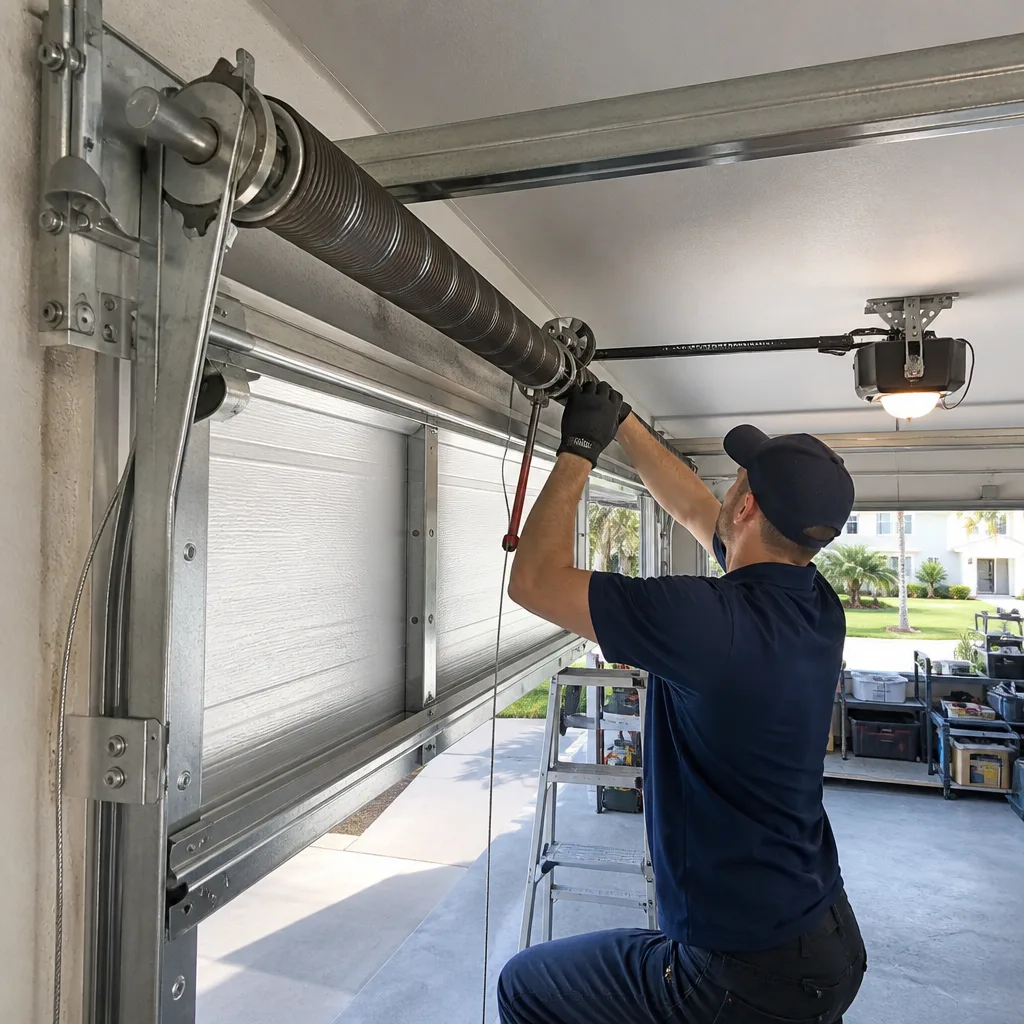
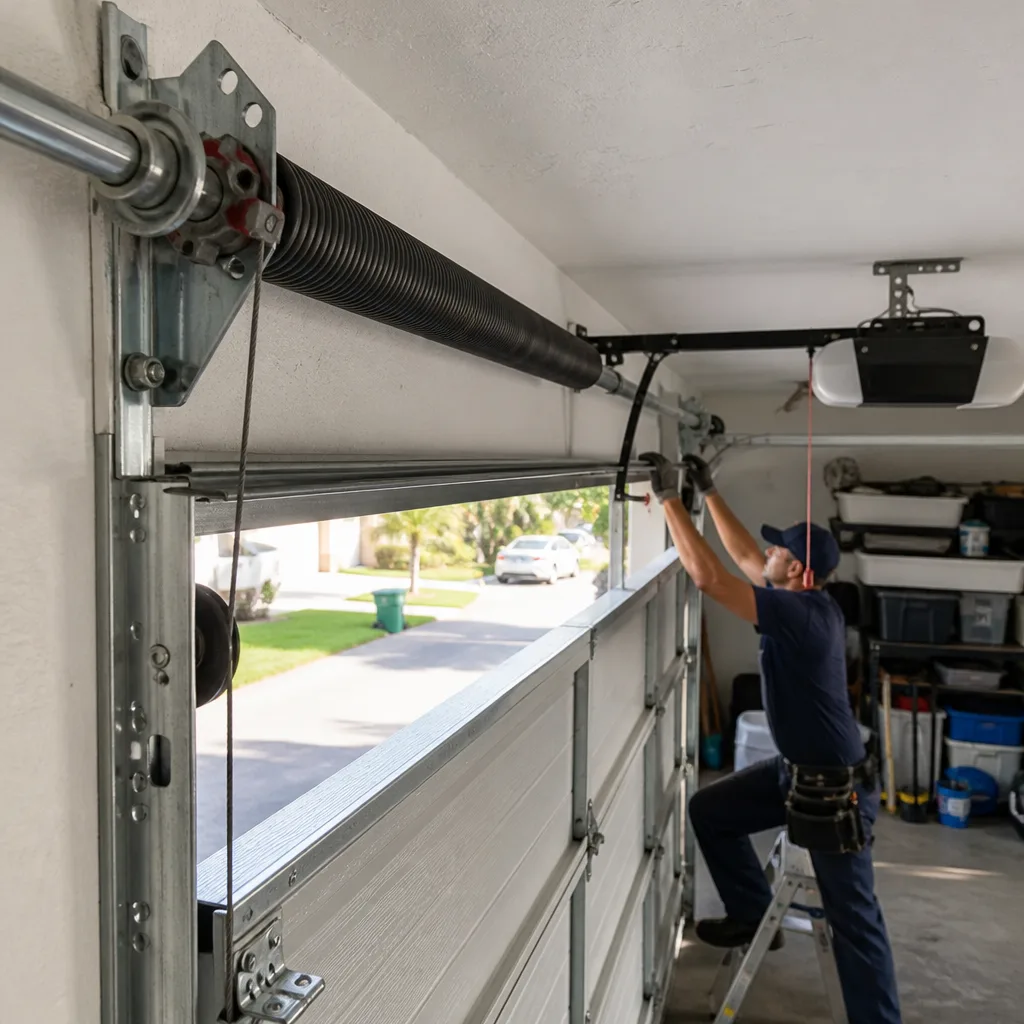
Step 4: Lubricate the Torsion Spring Shaft Bearings. The torsion spring is the large coil mounted above the door, and it does most of the lifting. It’s under extreme tension at all times. The shaft it’s mounted on turns inside two bearing plates, one at each end. If those bearings are dry or corroded, the spring itself fights friction, and that’s when springs break earlier than they should. A light silicone lubricant applied to the bearing surfaces in April reduces friction before the humidity arrives. We re-lubricate these during every garage door repair in West Palm Beach, but a homeowner can do it in a few minutes. Never attempt to touch or adjust the spring itself; the bearing lubrication is safe, but the spring is under deadly tension.
The Wet Season: June Through October
Rain in West Palm Beach is different from rain in most of the country. From June through October, daily thunderstorms dump an inch or two of water in an hour, humidity stays above 80 percent for weeks at a time, and coastal salt spray drifts inland. Your garage door hardware is essentially living in a warm, damp, salty environment for five months. Ongoing maintenance looks different in this season.
Wipe Track Surfaces Monthly. The vertical and horizontal tracks that guide your door collect moisture, pollen, and fine debris during the wet season. This muck dries into a gummy residue that increases rolling resistance. Once a month, take a clean rag and wipe down the inside surfaces of both tracks. No chemicals needed; a dry wipe followed by a light silicone spray is enough. Dirty tracks force the opener motor to work harder, which shortens motor life and increases the chance of a mid-season opener failure.
Re-Lubricate After Significant Rain Events. Heavy rain washes lubricant off pivot points, especially the torsion spring shaft bearings and the hinge pins. After any storm that drops more than two inches of rain, check those points and re-apply if they look dry. The wet season is when we see most spring failures in West Palm Beach, and dry bearings are a contributing factor.
Test the Manual Release Weekly During Storm Watches. The manual release is the red cord hanging from the opener rail. Pulling it disconnects the door from the opener carriage, allowing you to operate the door by hand if the power goes out. During hurricane season, test it every week. Pull the cord, raise and lower the door by hand two or three times, and reconnect. If the door is heavy or unbalanced during manual operation, the torsion spring has likely weakened and needs attention before a storm hits. An unbalanced door that you can’t operate by hand is a serious problem when the power is out for three days.
Post-Storm Inspection Checklist
After any named storm or significant wind event, do a quick visual inspection before you assume everything still works. Storm damage to garage doors is often subtle, and small damage leads to bigger failures weeks later. Here’s our post-storm checklist, in order:
- Check both tracks for dents or bends. Flying debris, palm fronds, and even wind-driven trash can dent a track. A dented track causes the door to bind, which strains the opener and ruins rollers. A small dent can often be repaired; a bent track needs replacement.
- Verify that each panel is intact and uncracked. If any panel was struck by debris and shows cracks or dents, the door’s wind-load rating may no longer apply. A door with a compromised panel will not perform as designed in the next storm. Document the damage with photos.
- Run the door through a full open-and-close cycle. Listen for grinding, scraping, or hesitation. Any of those sounds after a storm suggests something was knocked out of alignment.
- Check the bottom seal for tears or displacement. Storm water can force the seal out of its channel. If it’s torn, replace it before the next rain.
- Document everything with clear photos. Before calling your insurance company, take photos of any visible damage from multiple angles. Insurers in Florida want documentation of the door’s pre-storm condition, the damage, and any repairs you made in an emergency.
If you find damage and need a professional assessment, contact an experienced provider of garage door installation in West Palm Beach who can inspect the door and provide a written repair or replacement quote.
Photo-Eye Sensor Maintenance: The Year-Round Task That Matters Most
Every garage door opener manufactured since 1993 includes a safety system called photo-eye sensors. These are the small infrared units mounted near the floor on each side of the door opening. One sends an invisible beam across the doorway; the other receives it. If anything breaks that beam while the door is closing, the door reverses automatically. It’s a safety feature that prevents the door from closing on children, pets, or property.
In West Palm Beach, photo-eye sensors face conditions that most of the country doesn’t deal with. The combination of high humidity, lawn irrigation overspray, and Florida pollen creates sensor blockage at a rate roughly double the national average. Humidity condenses on the sensor lenses. Irrigation water drips onto the casing, bringing fertilizer minerals with it. Pollen coats everything during the spring. When the beam is partially blocked or the lenses are dirty, the sensors may fail intermittently, causing the door to reverse when nothing is in the way, or refuse to close at all.
Here’s what to do:
- Wipe the sensor lenses every two weeks. Use a dry microfiber cloth. No chemicals. Just a gentle wipe to remove pollen, dust, and mineral film.
- Check the alignment indicator lights. Most sensors have two small lights, one on each unit. Both should be solid. If one or both are blinking, the sensors have lost alignment.
- Verify that irrigation heads aren’t spraying the sensors. This is more common than you’d think. A sprinkler head aimed at the garage door will spray the sensor every cycle, and the mineral deposits will cloud the lens within weeks. Reposition the head or adjust the spray pattern.
- Check the wiring connections. Low-voltage sensor wires can corrode in humid, salty air. If the sensor lights don’t come on at all, check the connections at the back of each unit. If they’re clean and tight and the lights are still out, call a technician.
This is also the most common issue we fix during garage door opener repair in West Palm Beach. Most sensor problems are simple enough to handle at home if you catch them early.
What Seasonal Maintenance Costs in West Palm Beach
Seasonal maintenance is inexpensive compared to the repairs it prevents. For detailed pricing, see our Garage Door Cost Breakdown: The West Palm Beach Homeowner’s Reference for 2026. Here’s what you can expect to pay in the West Palm Beach market for the common items discussed in this guide. These are line-item ranges, not estimates for a specific job, but they’ll help you budget before you call.
- Bottom weather seal replacement: $90 to $150 including the part and labor, depending on door width.
- Side and top seal replacement: $60 to $120 for the full perimeter on most single doors.
- Full lubrication service (all hinges, rollers, bearings, and pivot points): $80 to $130.
- Photo-eye sensor cleaning and alignment: $70 to $110 if you can’t get it working yourself.
- Battery backup replacement for LiftMaster or Chamberlain openers: $100 to $180 depending on model.
- Hurricane bracing bracket inspection and tightening: Often included with a full tune-up; standalone cost is $50 to $90.
- Complete seasonal tune-up package: $120 to $200 for a full inspection, lubrication, seal check, balance test, and safety reverse test.
At Doyle Garage Doors West Palm Beach, every seasonal inspection includes a written price before any work starts. The price you’re quoted is the price you pay, and every repair is backed by our 365-Day Done Right Promise: if it fails within 365 days from the date of repair, we come back and make it right at no charge. No verbal estimates, no invoice surprises.
Common Mistakes to Avoid
- Following a national maintenance calendar. The “spring and fall” schedule is wrong for South Florida. Our two seasons require a completely different rhythm: April for storm prep and seal replacement, November for UV damage and hardware lubrication.
- Using WD-40 as a garage door lubricant. WD-40 is a penetrating cleaner, not a long-term lubricant. In this climate, it evaporates within days. Use a silicone-based lubricant made for garage door hardware.
- Ignoring slow or noisy operation during the dry season. A door that starts binding or squeaking in February will fail in July. Dry-season friction never fixes itself; it accumulates and turns into a broken spring or burned-out motor.
- Skipping the photo-eye sensor check until the door won’t close. By the time the door refuses to close, the sensors have been struggling for weeks. Regular lens cleaning prevents most failures entirely.
- Testing the battery backup for the first time during a hurricane. Battery backups fail quietly. If you find out the battery is dead when the power goes out, you can’t operate the door, and that’s a security and access problem during the worst possible weather.
- Not documenting post-storm damage before making temporary repairs. If you fix a dented panel or replace a torn seal before taking photos, your insurance claim gets harder. Document first, then repair.
- Assuming the torsion spring can be adjusted by hand. The torsion spring is under hundreds of pounds of tension. It’s not a DIY component. Bad spring repairs are a common cause of serious injury, and we strongly recommend a professional for any spring work.
When to Call a Professional
Some maintenance tasks are safe for a careful homeowner. Others require a trained technician. Call a professional if you notice any of these signs: the door is unbalanced when operated by hand, the torsion spring has visible cracks or gaps in the coil, the door makes a loud bang during operation, the opener reverses for no visible reason, or you see any damage to tracks or panels after a storm. Torsion springs are under extreme tension and can cause serious injury if mishandled. Doyle Garage Doors West Palm Beach offers free estimates in West Palm Beach. Call (728) 220-0705 and a live person answers, day or night, weekends and holidays. We’ll put the price in writing before any work starts.
Frequently Asked Questions
Lubricate all pivot points, hinge pins, and torsion spring shaft bearings every three months during the dry season, and monthly during the wet season or after any heavy rain. Rain washes lubricant off, and the humid air accelerates corrosion. A silicone-based lubricant applied to moving parts takes about 15 minutes and significantly extends spring and roller life. For a professional lubrication service with a written price before work starts, call (728) 220-0705.
A complete seasonal tune-up in West Palm Beach typically costs $120 to $200, depending on the door type and condition. That includes lubrication, seal inspection, balance testing, safety reverse testing, and hardware tightening. Individual services like seal replacement or sensor cleaning are priced separately, and the exact quote is always provided in writing before work begins. Call (728) 220-0705 for a free estimate.
The best time to replace a weather seal in West Palm Beach is April or early May, immediately after the dry season has finished baking the rubber and just before the wet season’s first heavy rains. A seal that’s cracked, stiffened, or flattened in April will leak within weeks. Replacing it in May means your garage stays dry through the entire hurricane season. The part is inexpensive, and the labor is quick.
Yes. Garage door opener battery backups in West Palm Beach degrade faster than in cooler climates because heat accelerates battery wear. We recommend testing in April or May, before hurricane season, by unplugging the opener and running the door on battery power. If the door moves slowly or not at all, the battery needs replacement. A dead battery backup means no door access during a power outage, which is precisely when you need it.
In most cases, the door reverses because the photo-eye sensors at the base of the door are dirty or misaligned. West Palm Beach’s combination of humidity, lawn irrigation overspray, and pollen makes sensor blockage roughly twice as common here as in drier climates. Clean the lenses with a dry cloth, check that both indicator lights are solid, and verify that no sprinkler head is spraying the units. If the problem persists, call (728) 220-0705 for a diagnosis.
You can safely handle basic maintenance tasks: cleaning photo-eye sensors, wiping track surfaces, lubricating hinge pins and roller stems, and replacing the bottom weather seal. You should never attempt to adjust, repair, or replace a torsion spring; the spring is under hundreds of pounds of tension and can cause serious injury. If the door is unbalanced, the spring is cracked, or the tracks are bent, call a professional with the proper tools and training.
The Bottom Line
West Palm Beach garage doors live in a climate that most maintenance guides weren’t written for. The dry season breaks down seals and hardware through UV and heat; the wet season turns that damage into corrosion and breakdowns. The smart schedule is simple: check seals and hardware in November, do a full storm-prep pass in April or May, and keep the photo-eye sensors clean all year. Most of this work costs under $200 per visit and prevents repairs that run $300 to $600 or more. For more guides & resources on keeping your door running smoothly, visit our blog. Doyle Garage Doors West Palm Beach has served this area since 2001, and every service includes a written price before work starts and a written 365-day guarantee on repairs. Call (728) 220-0705 for a free estimate, and a live person will answer, day or night.
Written by Aaron Teague, Owner at Doyle Garage Doors West Palm Beach, serving West Palm Beach since 2001.
See the difference
 Before
 After
After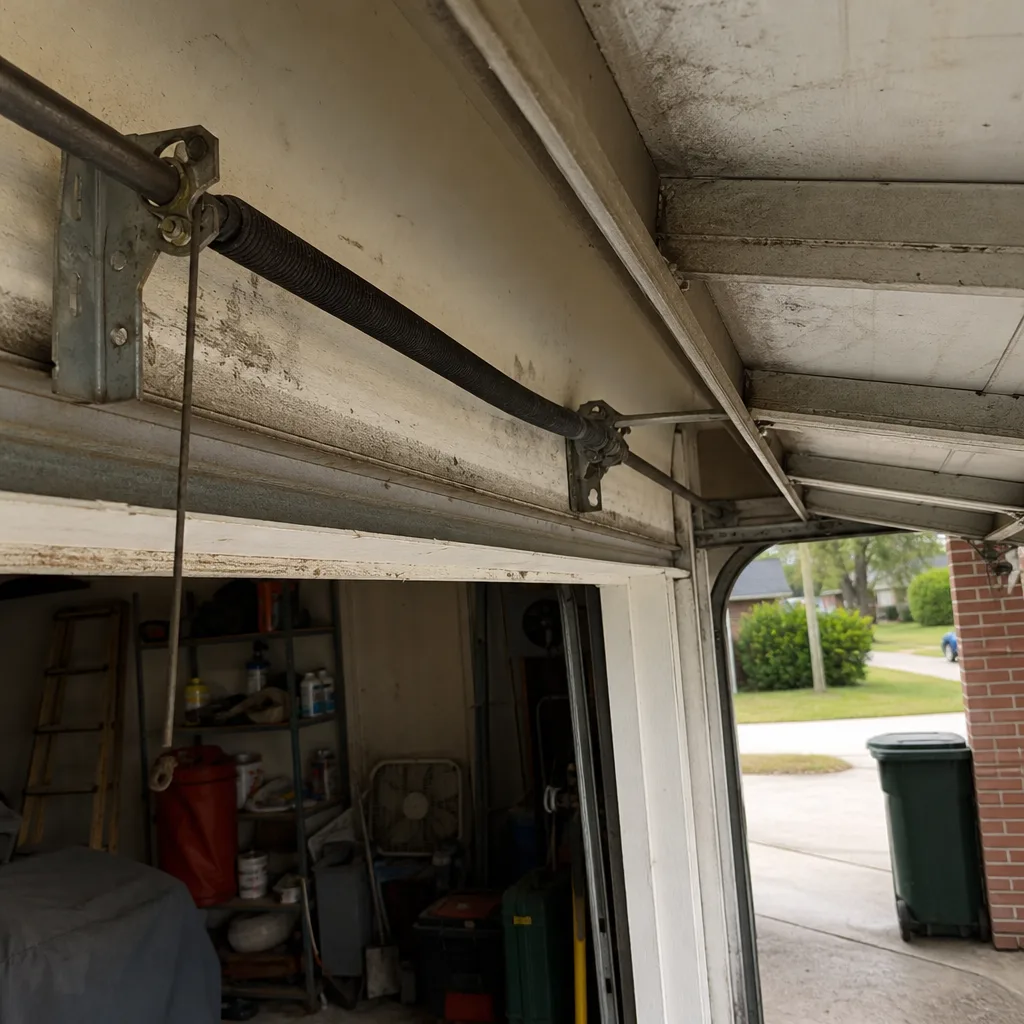 Before
 After
After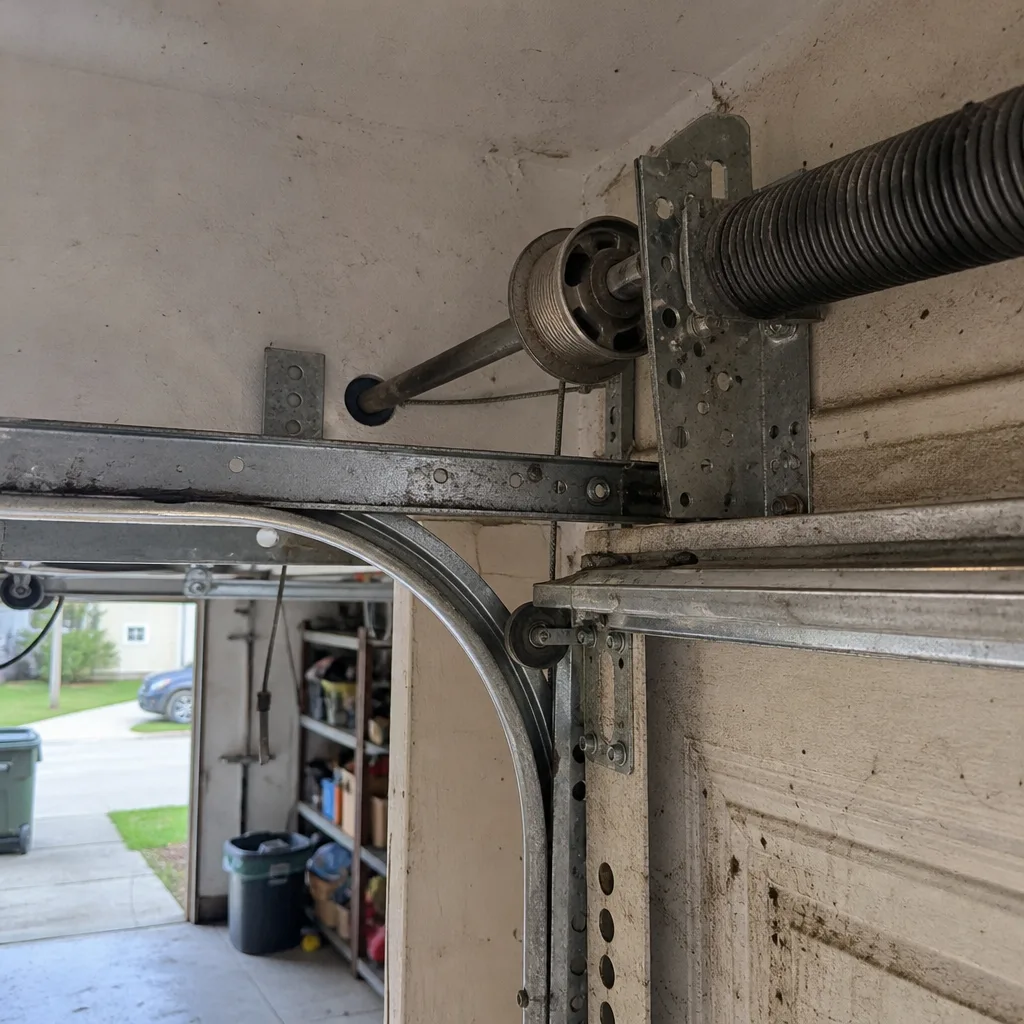 Before
 After
After